
Arnolda's Water Access Comes in Tiers
Properties on the same private road in Charlestown, Rhode Island can sit in very different price tiers, and the difference has almost nothing to do with square footage. One buyer gets pond frontage, a dock, and a ten-minute run to open water. Another buyer gets the exact same association membership card and has to load a kayak onto a car rack to reach the beach. Same neighborhood. Same dues. Completely different asset.
That gap is the story in Arnolda, and it's the reason a portal search here tells you less than it seems to. If you're comparing this pocket of Charlestown against other South County or southeastern Connecticut waterfront communities, the number that matters isn't the median price. It's which tier of access comes attached to the deed.
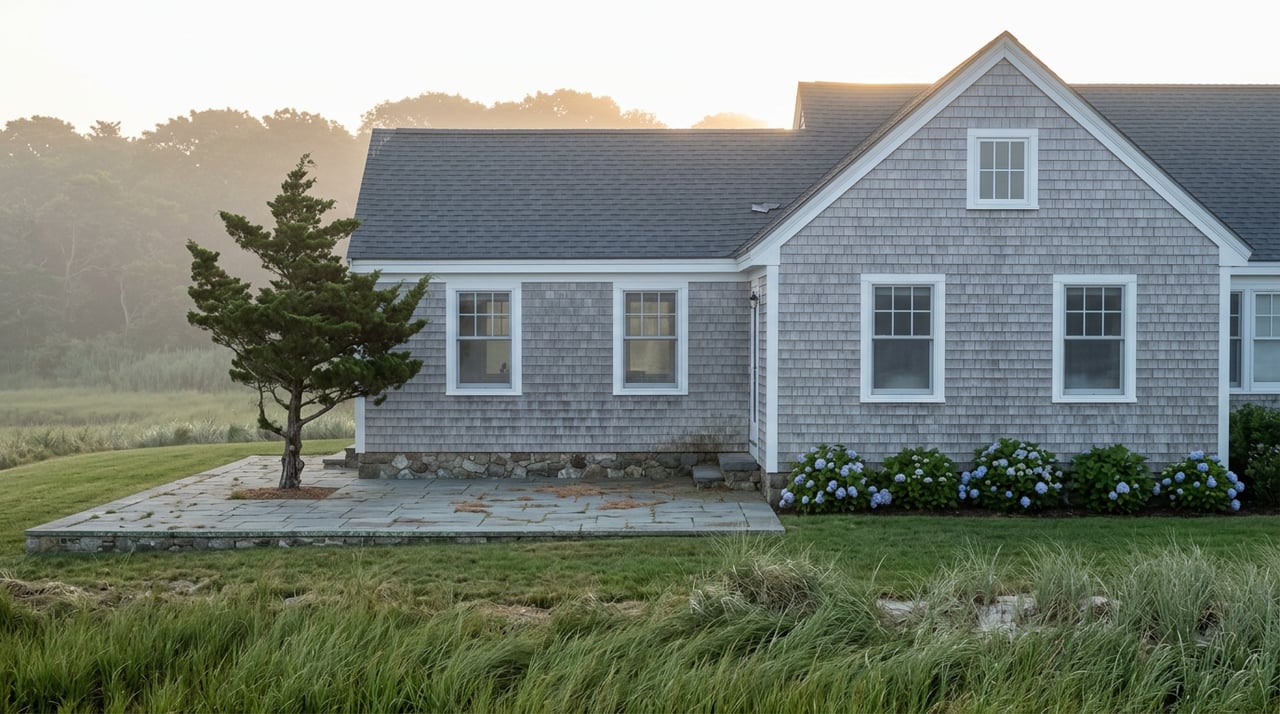
According to The Independent, Arnolda isn't a subdivision with a marketing name. It's a private association built on land that traces back to a single family, the Arnolds, whose descendants still own and build there today. The East Arnolda Association covers roughly 85 acres overlooking Ninigret Pond, and the community it created has stayed remarkably intact for a place this close to the water: a private beach, a dock built for four boats, tennis courts, and a ten-minute boat ride out to the open Atlantic. Bald eagles nest nearby. The whole property borders Ninigret National Wildlife Refuge and the town's Ninigret Park, which means the buffer around Arnolda is public even though almost nothing inside it is.
That's an unusual setup for coastal Rhode Island. Most waterfront neighborhoods either sell you frontage directly or don't sell you water access at all. Arnolda sells a membership, and the membership means different things depending on which lot you're standing on.
Walk the comps and you can see the tiers separate out clearly.
At the top, a 5.49-acre Arnolda parcel with direct frontage on Ninigret Pond carried an asking price a touch over $4 million. That's a lot with its own shoreline, its own view, no boat required to reach the water because the water is already at the property line.
One tier down, a home on South Arnolda Road sold in the summer of 2019 for $1.32 million, a 3,772-square-foot house where the listing specifically noted Ninigret Pond access "steps outside the front door," good for kayaking, paddleboarding, and clamming straight from the yard. Not frontage exactly, but close enough that the water is part of daily life rather than a boat ride away.
Below that sits the tier most buyers don't expect: a two-acre inland lot on the same private road, sold in March 2019 for $810,000, with an open field and long sunset views but no direct water access at all. What that price bought instead was the association package. The listing spelled it out plainly. The neighborhood association owns a tennis court and a private ocean beach accessible by boat, plus four docks with rights of way to the water. No boat, no beach that day. The deed grants the right. It doesn't grant the transportation.
Some inland building lots go a step further and hand you a backup plan in writing. One recent Arnolda lot listing noted that if you don't have a boat, you can ride a bicycle or drive about two miles to Charlestown Town Beach, a public beach with no association dues attached. It's a small detail, but it tells you how carefully this market has to explain itself. Buyers keep needing the difference between owning water and owning a right to reach it spelled out in the listing copy, because the two get confused constantly.
This isn't just marketing language dressed up to sound exclusive. Charlestown's own harbor management system recognizes the association tier as a distinct legal category. The town's mooring permit schedule prices an association mooring permit at $260, the same rate as a commercial permit and separate from the standard private waterfront rate. Public moorings, by contrast, are handed out strictly by waiting list. In other words, the town treats an association's shared water rights as their own kind of property right, not just a private club perk.
That matters for how you read the whole package. The tennis court, the four-boat dock, the private beach reachable by boat, these are commons that dues fund and the association's charter protects. When you buy into Arnolda without direct frontage, you're not buying consolation. You're buying a fractional stake in shared infrastructure that the town itself recognizes as a formal category of water access.
There's a second layer to this that raw land buyers specifically need to watch. Several vacant Arnolda parcels are marketed with septic approval already secured, phrased as "4 Bedroom ISDS Septic Approval in Place." On a lot without municipal sewer, that approval is its own form of embedded value. Coastal Rhode Island lots near ponds and wetlands can face real friction getting septic systems approved at all, so a parcel that already cleared that step is worth more than an identical parcel that hasn't, independent of anything to do with the water.
If you're cross-shopping Arnolda against other waterfront pockets in southeastern Connecticut or South County, the question to ask isn't "is this waterfront." It's "which tier of the association's rights is attached to this specific lot, and does that match how I actually want to use the water."
Someone who wants to step off a private beach without driving anywhere needs direct frontage, full stop, and should expect to pay for it at the level that $4 million parcel commands. Someone comfortable loading a kayak once a week, or riding bikes to the public town beach on the days the boat stays at the dock, can get into the same tight-knit, deed-restricted community for a fraction of that number by choosing an inland lot with association access instead of frontage. Neither choice is wrong. But confusing the two tiers, or assuming "in Arnolda" automatically means "on the water," is how a buyer ends up disappointed after closing.
It's also worth thinking about resale through the same lens. A future buyer for an inland, association-access lot is drawing from a wider pool of people comfortable with boat-only or bike-to-beach living. A future buyer for direct frontage is a narrower, higher-budget pool. That difference shapes how each type of Arnolda property behaves on the market years down the road, not just what it costs today.
None of this shows up in a median price. It only shows up when someone walks the specific parcel with you and reads the deed the way an appraiser would, not the way a listing photo does.
Arnolda rewards buyers who ask the right question before they fall for a view. If you're weighing this Charlestown enclave against other coastal Rhode Island or Connecticut communities, Mystic & More can walk you through which specific lots carry direct frontage, which carry association-tier access, and what that distinction is likely to mean for your day-to-day life on the water and your resale pool later. Reach out to start that conversation, or request a free home valuation if you're weighing a sale of your own waterfront property against what a deed like this is currently worth.
This article is general information, not legal, tax or financial advice. Consult a qualified professional about your situation.


We pride ourselves in providing personalized solutions that bring our clients closer to their dream properties and enhance their long-term wealth. Contact us today to find out how we can be of assistance to you!